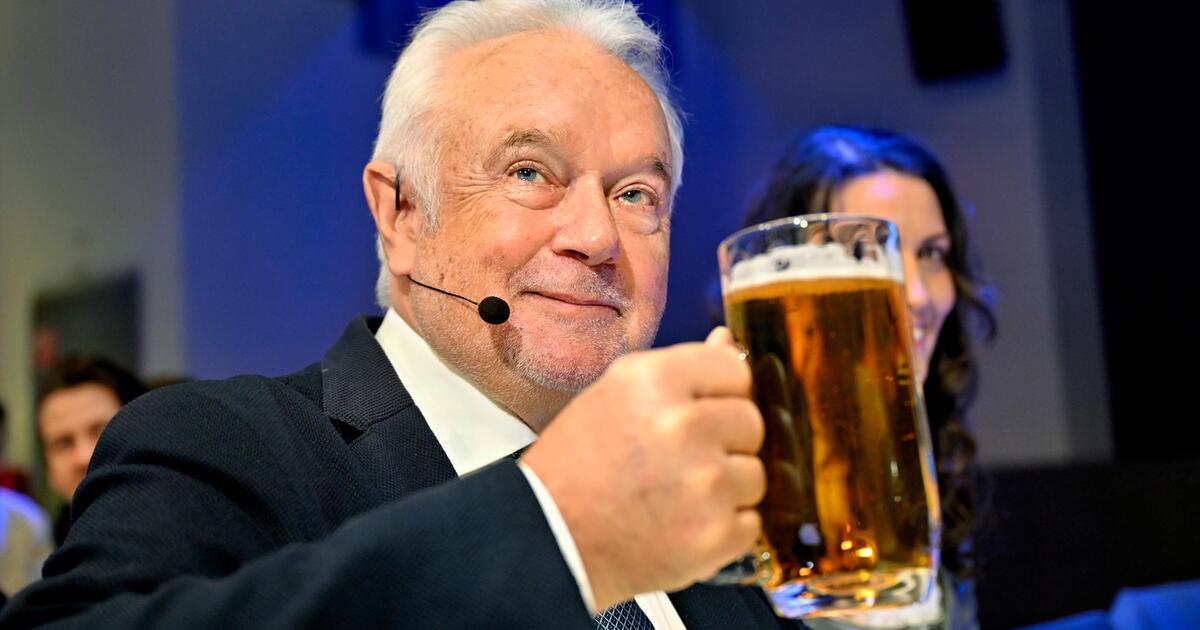
At 74, Wolfgang Kubicki Aims to Revive the FDP: A Veteran's Bold Bid for Relevance
The political landscape in Germany is frequently marked by shifts, challenges, and the perennial quest for relevance among its parties. For the Free Democratic Party (FDP), recent electoral setbacks in crucial states like Rhineland-Palatinate and Baden-Württemberg have cast a long shadow, prompting an urgent search for direction and leadership. Amidst this backdrop of uncertainty, a familiar and formidable figure has emerged, throwing his hat into the ring with a bold and somewhat surprising declaration: Wolfgang Kubicki.
At an age when many contemplate retirement, Kubicki, a seasoned FDP veteran, has announced his intention to lead the party out of its current slump. The question, Wie Alt Ist Kubicki, often arises, highlighting not just his 74 years, but the immense experience and distinct political style he brings to the fore. His candidacy is not merely a leadership challenge; it's a profound statement about the future, or lack thereof, for a party teetering on the brink of political obscurity.
A Maverick's Mission: Kubicki's Unconventional Vision for Revival
Wolfgang Kubicki is not one to mince words, nor is he a stranger to controversy. Known for his "kantige Art" – an edgy, unconventional, and often confrontational style – he believes this very quality is what the FDP desperately needs to recapture public attention. In an increasingly fragmented political discourse, Kubicki argues that his directness and willingness to challenge norms can cut through the noise, allowing the FDP's message to finally be heard again.
His declaration is marked by a pragmatic and almost self-deprecating honesty. "I am not the future of the FDP," Kubicki stated, "but I want to do everything I can to ensure the party still has a future." This isn't a bid for a long-term dynasty, but rather a short-term, crisis-management mission. It underscores a deep commitment to the party's survival rather than personal ambition for an extended tenure.
Kubicki frames the upcoming party convention as a high-stakes decision point. "The question is, and the delegates at the party congress must decide this, success or meaninglessness, Kubicki or the rest of the world." This stark choice highlights the existential challenge facing the FDP and positions Kubicki as potentially its last, best hope for reclaiming its place in German politics. His approach suggests that bland conformity will no longer suffice; what's needed is a distinct, resonant voice that dares to be different.
The Seasoned Hand: Experience vs. Novelty in German Politics
For a political party struggling to find its footing, the choice of a leader often boils down to a fundamental dilemma: opt for fresh, young blood to signal a new beginning, or turn to an experienced veteran who understands the political machinery inside out. With Wolfgang Kubicki, the FDP is strongly considering the latter.
The fact that Wie Alt Ist Kubicki is 74 brings with it a wealth of advantages. He possesses deep institutional knowledge, an established network across the political spectrum, and a proven track record of resilience. His long career as an "Urgestein" (absolute old-timer or veteran) means he has weathered numerous political storms, offering a steady hand in turbulent times. Yet, his appeal isn't just about experience; it's also about a distinct pragmatism that has often seen him challenge traditional FDP alignments.
A notable example of this pragmatism comes from his past willingness to openly support former SPD Chancellor candidate Peer Steinbrück, even suggesting a "traffic light coalition" (Ampelkoalition) with the SPD and Greens. This wasn't merely personal camaraderie; it was a strategic assessment of potential political paths for the FDP, even if it meant venturing beyond conventional alliances with the Christian Democrats. As discussed in more detail in Kubicki's Maverick Politics: An FDP Opening to the Left?, this willingness to consider unorthodox alliances speaks volumes about his focus on what benefits the FDP, rather than adhering to rigid ideological lines. His memorable quip about his "right ear being deaf" – a statement he clarified as a medical condition but which was widely interpreted as a political metaphor for selective listening or openness to new ideas – further underscores his unconventional approach.
The FDP's Crossroads: Why Kubicki Now?
The FDP's recent electoral losses were not just minor setbacks; they were profound indicators of a party struggling to articulate a clear purpose and value proposition to voters. Losing representation in state parliaments can severely impact a party's visibility, funding, and overall influence at the federal level. The party found itself in a void, "still searching for answers" to how it could regain its footing.
This is where Kubicki's intervention becomes critical. His pitch is simple yet powerful: he can restore the FDP's "Bedeutung" (significance or relevance). What the FDP needs now, he argues, is not necessarily a complete ideological overhaul, but rather a strong, clear, and distinctive voice that commands attention. His "kantige Art" is precisely what he believes can cut through the political noise and re-establish the FDP as a relevant player.
For a party like the FDP, which traditionally advocates for liberal economic policies and individual freedoms, the challenge is often to differentiate itself from larger parties and avoid being squeezed in the political center. Kubicki’s strategy appears to involve a combination of:
- Unfiltered Communication: Delivering messages directly and without excessive political spin, which can appeal to voters tired of perceived political correctness.
- Strategic Pragmatism: Being open to diverse coalition options, as demonstrated by his past leanings towards a "traffic light coalition," which expands the FDP's potential sphere of influence.
- Experienced Leadership: Providing stability and confidence to a party base that has experienced recent disappointments.
Lessons from Kubicki's Past Political Pragmatism
Kubicki's political history offers further insights into his potential leadership style. His support for Peer Steinbrück wasn't just about friendship; it was a recognition of competence. "The only person Germans trust with competence in these times is Steinbrück," Kubicki once said, subtly contrasting Steinbrück's perceived strength with Chancellor Merkel's "bamboo reed" approach during the Euro crisis – a veiled critique also directed at his own FDP leadership at the time. This demonstrates his willingness to evaluate political figures and strategies based on perceived effectiveness, even if it means challenging party lines.
His nuanced position on potential coalition partners – stating he wouldn't govern with "every 'Sozi'" (social democrat) but that "who helps us to our majority is ultimately irrelevant" – underscores a results-oriented approach. For Kubicki, the ultimate goal for the FDP is to be in a position of influence, to implement its policies, and to secure a majority, regardless of the ideological leanings of its partners, as long as core liberal principles are respected.
Practical Insights for Political Revival
Kubicki's bid offers several practical insights for any political party or organization facing decline:
- Leadership Diversity: While youth often symbolizes the future, seasoned experience (like that demonstrated by Wie Alt Ist Kubicki) can be invaluable for navigating crises and providing stability.
- Distinctive Voice: In a crowded marketplace of ideas, standing out requires a unique and unapologetic voice. Generic messaging often leads to irrelevance.
- Strategic Openness: Limiting options based on rigid ideological purity can be detrimental. Pragmatism and a willingness to explore unconventional alliances can open new avenues for influence.
- Clear Value Proposition: A party must constantly articulate what it stands for, what problems it solves, and why voters should trust it. Kubicki aims to make the FDP's value proposition undeniable.
Conclusion
Wolfgang Kubicki's challenge for the FDP leadership is more than a routine internal party contest; it's a high-stakes gamble for the very soul of the Free Democratic Party. At 74, the question of Wie Alt Ist Kubicki is answered not just by a number, but by a career steeped in experience, maverick political choices, and an unwavering commitment to the liberal cause. His "kantige Art" is his weapon, his pragmatism his strategy, and his goal nothing less than to pull the FDP back from the precipice of irrelevance. Whether the delegates at the party congress choose to embrace this veteran's bold vision for revival will determine not only Kubicki's final political chapter but, crucially, the future trajectory of German liberalism.