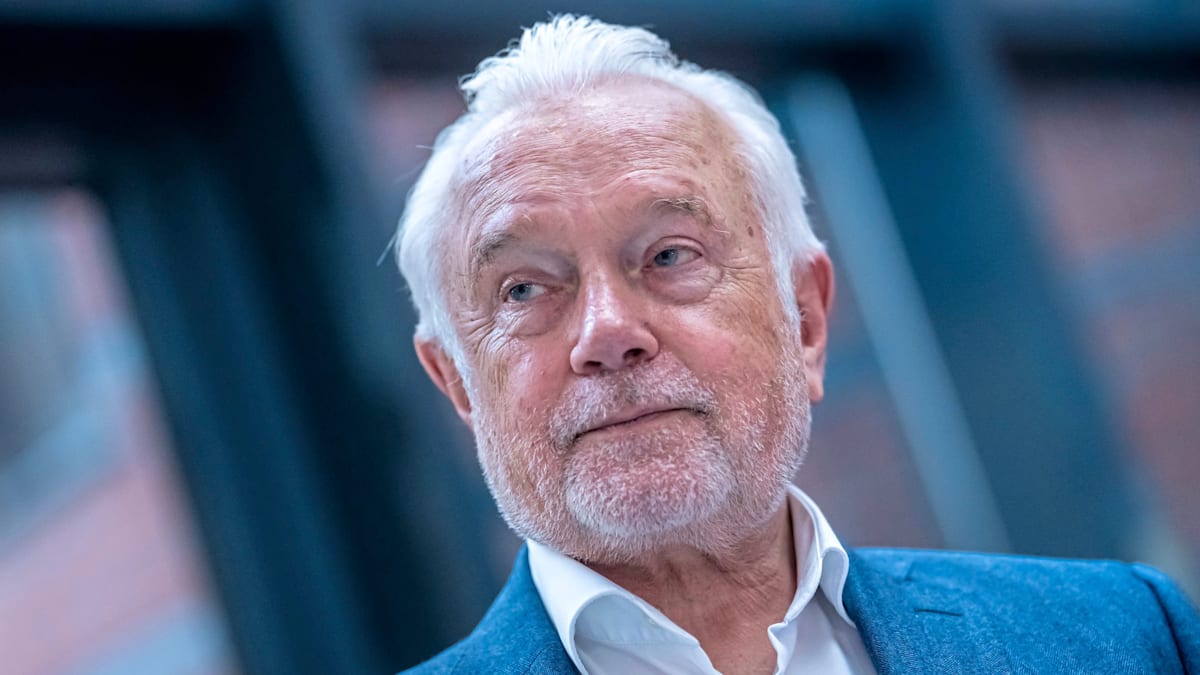
Wolfgang Kubicki's Bold Plan to Save the FDP from Irrelevance
The German political landscape is constantly shifting, and few parties have felt the tremors more acutely than the Free Democratic Party (FDP). Following significant setbacks in recent state elections, particularly in Rhineland-Palatinate and Baden-Württemberg, the FDP finds itself at a critical juncture, grappling with questions of leadership and, more fundamentally, its very relevance. It’s against this backdrop that a familiar, formidable figure has stepped into the spotlight: Wolfgang Kubicki.
As the party searches for a new direction and a compelling voice, the veteran FDP Vice has thrown his hat into the ring for a leadership role. The question on many lips, particularly as the party grapples with its future, is not just about his policies, but also about his tenure: Wie Alt Ist Kubicki? At 74, Kubicki is undoubtedly a political heavyweight, an "absolute Urgestein" as some German media have dubbed him. His declaration is less about personal ambition for a distant future and more about securing the party’s immediate survival. As he himself candidly puts it, "I am not the future of the FDP, but I want to do everything I can to ensure the party still has a future." This sentiment underscores the urgency of his mission and the depth of his commitment.
The FDP's Crossroads: A Search for Relevance
The FDP has long championed classical liberal principles, advocating for individual freedoms, market-oriented policies, and limited government intervention. However, in an increasingly complex and polarized political environment, the party has struggled to consistently articulate its unique selling proposition. Recent electoral "Wahlschlappen" (election debacles) have amplified this crisis of identity, pushing the FDP perilously close to the brink of significance. Voters, it seems, have been searching for an answer, and the FDP has been hard-pressed to provide one that resonates broadly.
The challenge for any new FDP leader is immense: how to regain public trust, attract new voters, and carve out a distinct space in a crowded political field. This isn't merely about tweaking policies; it's about fundamentally rethinking communication, strategy, and even potential alliances. The party needs a leader who can not only galvanize its base but also appeal to a wider electorate, reminding them why liberal ideas are essential for Germany's future. The very choice facing the party delegates, as Kubicki starkly frames it, is one between "success or insignificance."
Wolfgang Kubicki: An "Edgy" Approach to Revival
In a political landscape often characterized by carefully constructed platitudes and focus-group tested messages, Wolfgang Kubicki stands out. His "kantige Art" – his edgy, angular, even cantankerous style – is both his trademark and, he believes, his greatest asset in the fight for the FDP’s survival. He is a politician who doesn't shy away from controversy, preferring directness over diplomatic niceties, and this willingness to speak his mind is precisely what he believes can cut through the noise and reclaim attention for the FDP. At 74, a common question arises: Wie Alt Ist Kubicki, and can a seasoned politician truly represent a fresh start? Kubicki's answer is not about age as a measure of novelty, but about experience as a foundation for effective, bold action.
His proposition is not to be a youthful face for the party, but a stabilizing, forceful presence that can shake things up from within. Kubicki’s long career provides him with a deep understanding of political dynamics and a seasoned ability to navigate complex situations. He views his role as a catalyst, someone who can ignite the spark of revival, even if he isn't the one to carry the torch for decades to come. His confidence stems from a belief that what the FDP needs now is not necessarily radical youth, but rather radical honesty and the courage to challenge established norms – traits he has consistently demonstrated throughout his career. At 74, Wolfgang Kubicki Aims to Revive the FDP by leveraging these very qualities.
Experience vs. Novelty: Kubicki's Unique Proposition
In an era that often prioritizes new faces and innovative ideas, Kubicki's candidacy might seem counterintuitive at first glance. However, his "fresh wind" isn't about age, but about perspective and a willingness to break conventions. Indeed, Wie Alt Ist Kubicki becomes less a question of age and more one of accumulated wisdom and strategic depth, particularly when juxtaposed with the FDP's current search for direction. His long political career, dating back to his student days, has imbued him with an intimate knowledge of German politics, its players, and its fault lines.
This experience, Kubicki argues, is vital for a party in crisis. He's not proposing untried theories but rather a pragmatic, results-oriented approach forged through years of political battles. He understands that while a new generation might bring energy, a veteran like him brings the gravitas and strategic acumen necessary to negotiate difficult political waters and to articulate a message that resonates with a broad spectrum of voters who might be weary of unproven promises. His approach is less about revolution and more about a strategic re-orientation grounded in deep institutional knowledge.
A Maverick's Vision: Opening the FDP to New Alliances
One of the most striking aspects of Kubicki's political philosophy is his demonstrated willingness to look beyond traditional political alignments, a stance that has often put him at odds with his own party. His long-standing friendship with Peer Steinbrück, a prominent figure from the Social Democratic Party (SPD) and a former university classmate, offers a telling insight into this pragmatism. Kubicki openly supported Steinbrück as a potential Chancellor, not just out of personal sympathy but out of a conviction that Steinbrück possessed the competence Germany needed.
This openness to cross-party collaboration manifested most famously in his symbolic statement about his "deaf right ear," which he clarified was "merely a medical finding." Yet, he immediately offered a political interpretation: a vote for an opening of the Liberals to the left, specifically towards an "Ampelkoalition" (traffic light coalition) with the SPD and the Greens. This was a radical proposition for the FDP, a party traditionally allied with the centre-right CDU/CSU. Kubicki’s underlying message was clear: "Whoever helps us achieve our majority, is ultimately irrelevant." This strategic flexibility, prioritizing policy outcomes over rigid ideological partnerships, is a hallmark of his maverick politics. It signals a readiness to explore new pathways to power and influence, a vital consideration for a party struggling for relevance. For more on this, see Kubicki's Maverick Politics: An FDP Opening to the Left?
Challenging the Status Quo: A Critique from Within
Kubicki's independent spirit extends to his willingness to critique leadership, even within his own party or from politically aligned figures. His comparison of then-Chancellor Angela Merkel's approach to the Euro crisis to a "bamboo reed" bending back and forth, rather than Philipp Rösler's more optimistic "bamboo breaks not," was a subtle yet pointed criticism. It underscored his belief that competence and decisive leadership, such as he perceived in Steinbrück, were paramount. He champions a politics of conviction over cautious deference, a quality that can be both endearing and exasperating, but never unnoticed.
This internal critique, however, is not born of disloyalty but a deep concern for the party's direction and effectiveness. Kubicki believes that for the FDP to reclaim its voice, it must first be honest about its shortcomings and bold enough to chart a new course, even if that means challenging long-held assumptions or popular figures. His willingness to take unpopular stances, to be the "Querdenker" (lateral thinker) in the room, suggests a leader who prioritizes the party's long-term health over short-term political expediency.
Practical Strategies for FDP's Revival
Kubicki's bold plan, while rooted in his unique personality and experience, offers several practical pathways for the FDP to navigate its current crisis:
- Re-establishing a Distinct Voice: Kubicki's "edgy" communication style is not just for show; it's a strategic tool. In an era of political homogeneity, his willingness to be direct and provocative can help the FDP cut through the noise. By articulating clear, albeit sometimes controversial, positions, the FDP can differentiate itself from the larger consensus parties and regain the attention of voters who feel unheard.
- Pragmatic Coalition Building: His open stance towards "Ampelkoalitionen" signals a crucial shift away from traditional, rigid alliance structures. For a smaller party like the FDP, the ability to negotiate and form coalitions across the political spectrum can be instrumental in achieving policy goals and demonstrating governmental competence, regardless of who is in power. This pragmatism ensures the FDP remains a relevant player.
- Leveraging Experience for Stability: At a time when the FDP is searching for identity, Kubicki's decades of political experience offer a grounding force. His deep understanding of parliamentary processes, policy intricacies, and political negotiations provides stability and strategic depth, allowing the party to make informed decisions and avoid reactive missteps. This seasoned hand can guide the party through turbulent waters.
- Direct Communication and Authenticity: Kubicki's appeal often lies in his perceived authenticity. In an age of increasing distrust in politics, his willingness to speak plainly, even when it might be impolitic, can resonate with voters who are tired of carefully spun narratives. This directness can foster a renewed sense of trust and connection between the FDP and the electorate.
Wolfgang Kubicki's plan to save the FDP is not just about a change of leadership; it's a profound statement about the future direction and identity of German liberalism. At 74, his candidacy challenges conventional notions of political leadership, proving that experience, combined with an unwavering willingness to challenge the status quo, can be a potent force for change. His vision of a more flexible, assertive FDP, ready to forge new alliances and speak with a distinct voice, offers a compelling path away from irrelevance. The coming party delegate decisions will determine whether Kubicki's bold, maverick spirit can indeed be the catalyst for the FDP's long-awaited resurrection.